
A Small Workshop, Not a Factory
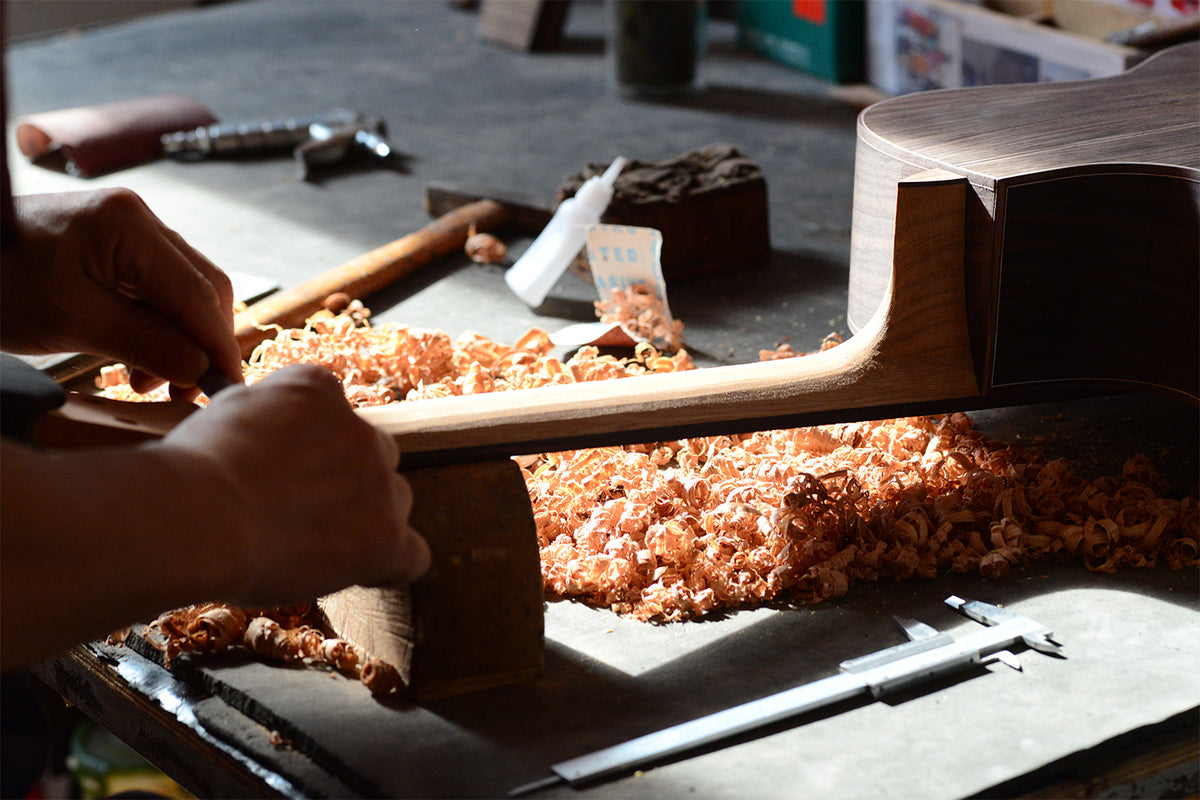
A workshop has a heartbeat. You can feel it in the rhythm of tools, in the smell of wood being worked, and in the small pauses where a maker stops—not because the work is finished, but because the work is asking a question. A factory has rhythm too, but it is designed for repeatability and scale. A factory asks: "How do we make this efficiently, consistently, and repeatedly?". A workshop asks: "What does this instrument need?". A factory and a workshop can respect one another, but they are playing different games.
When Andy Powers of Taylor Guitars visited the Nagano workshop of Japanese master Mitsuhiro Uchida, it was a meeting of two different worlds. A factory must find a way to make thousands of guitars consistently, but an independent maker like Uchida chooses a different burden. He deliberately limits his production because he believes every guitar must remain a unique challenge and an evolution of his craft. At Hozen Guitars, we chose the path of the workshop. To treat every piece of wood identically on a production line is to sacrifice the soul of the instrument.
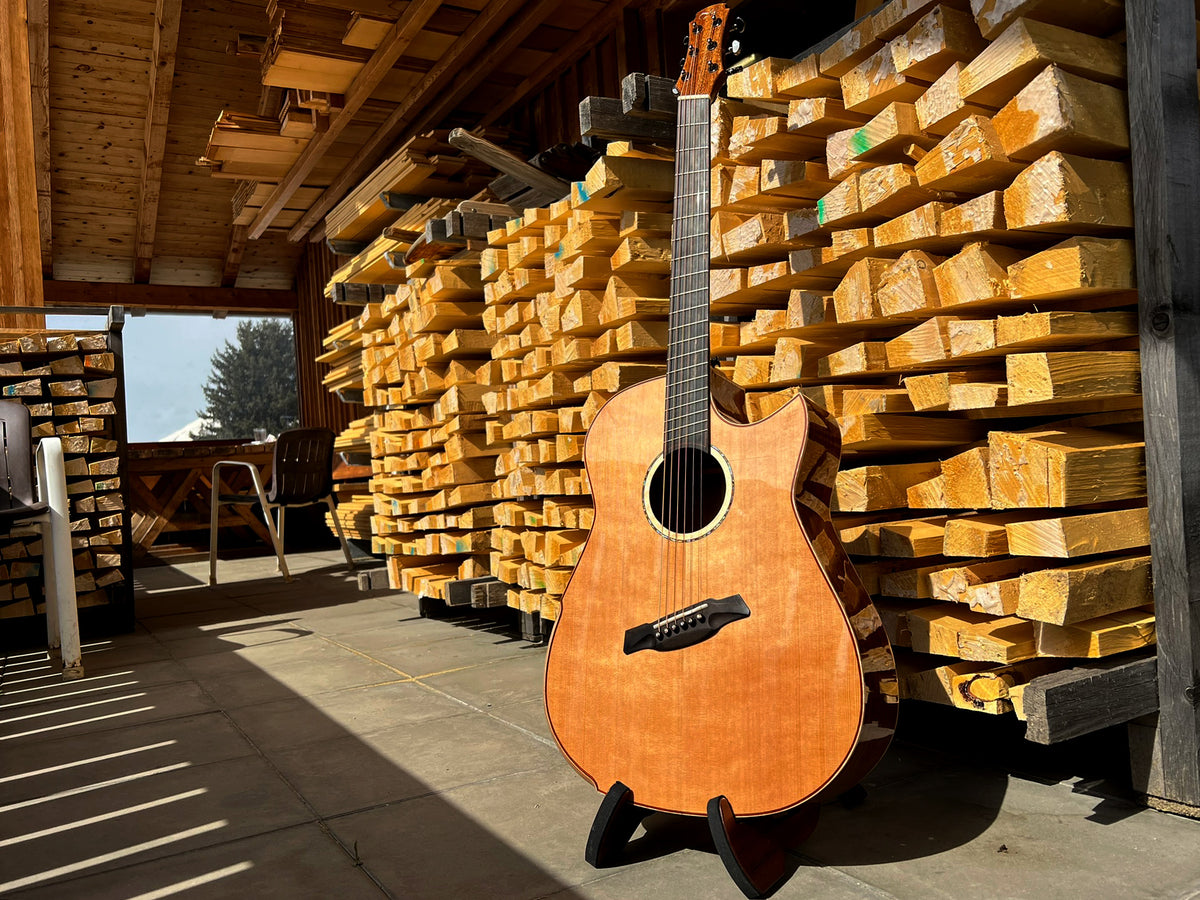
Today, Hozen Guitars operates as an intimate atelier of just three to four luthiers. However, combining hand-voiced precision with an extensive suite of ergonomic features is incredibly labor-intensive. To solve this, we utilize a unique "team-built" approach. I delegate specific steps of the build to master specialists: the finish is handled by a luthier with 20 years of experience, the neck is shaped by an expert dedicated solely to necks, and the bindings are crafted by a specialist who understands them intimately. This delegation frees my hands to focus entirely on what I do best: carving the braces, flexing the wood, and individually hand-voicing every single top.
I personally inspect, refine, and sign off on the tone, response, and structural integrity of every build that leaves our hands. Machines have their place in our workshop; they can cut with accuracy, ensure precision neck geometry with the PLEK station, and reduce unnecessary error. But machines cannot replace the human touch. They do not understand sweetness, resistance, bloom, or emotional connection.