
The Path Through the Workshop
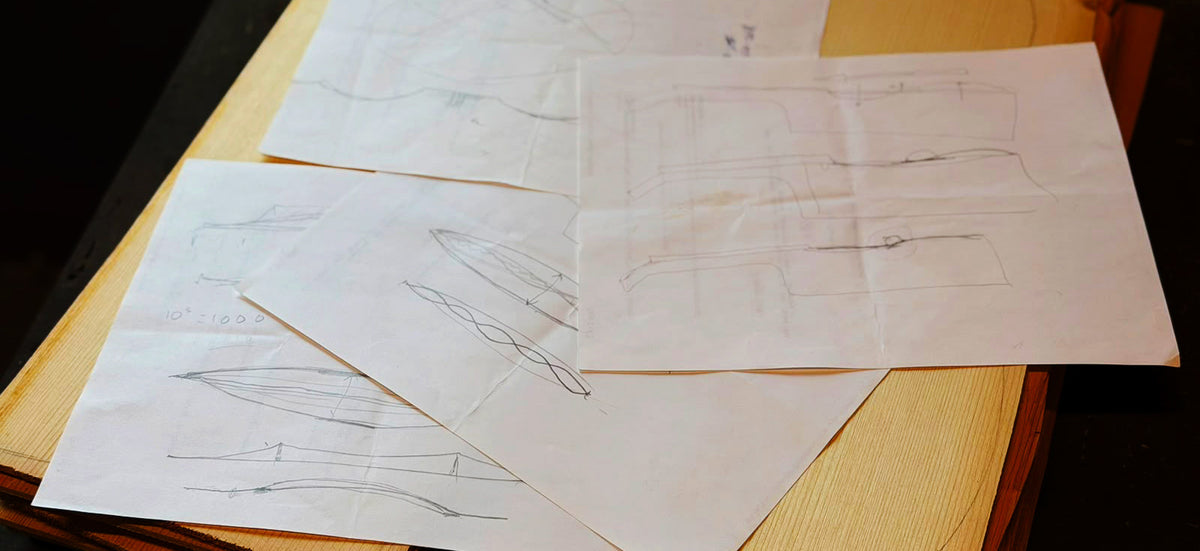
Every guitar begins before the first cut, in the wood room. Wood is never neutral; it carries weight, stiffness, moisture, history, grain, and memory. The first act of craft is selection. We do not rely on visual "Mastergrade " titles alone; the material must earn its place. We test the velocity of sound traveling through the wood using a Lucchi meter, giving us a quantified measurement of the sonic potential within each piece. Because every piece of wood has varying degrees of flexibility, we abandon the concept of standardized top thickness.

Instead, each soundboard is tested and sanded down until a specific target level of deflection is achieved, perfectly balancing its unique stiffness against its weight. The braces are carved thin but tall. Drawing from the "Cube Rule of engineering, we maximize the strength-to-weight ratio, keeping the guitar structurally resilient while allowing the soundboard to remain remarkably light. The rim gives the guitar its shape, but it also gives the instrument its most important boundary. We utilize the Rigid Rim Technology, adding an additional layer of wood alongside solid linings to create extremely stiff sides.
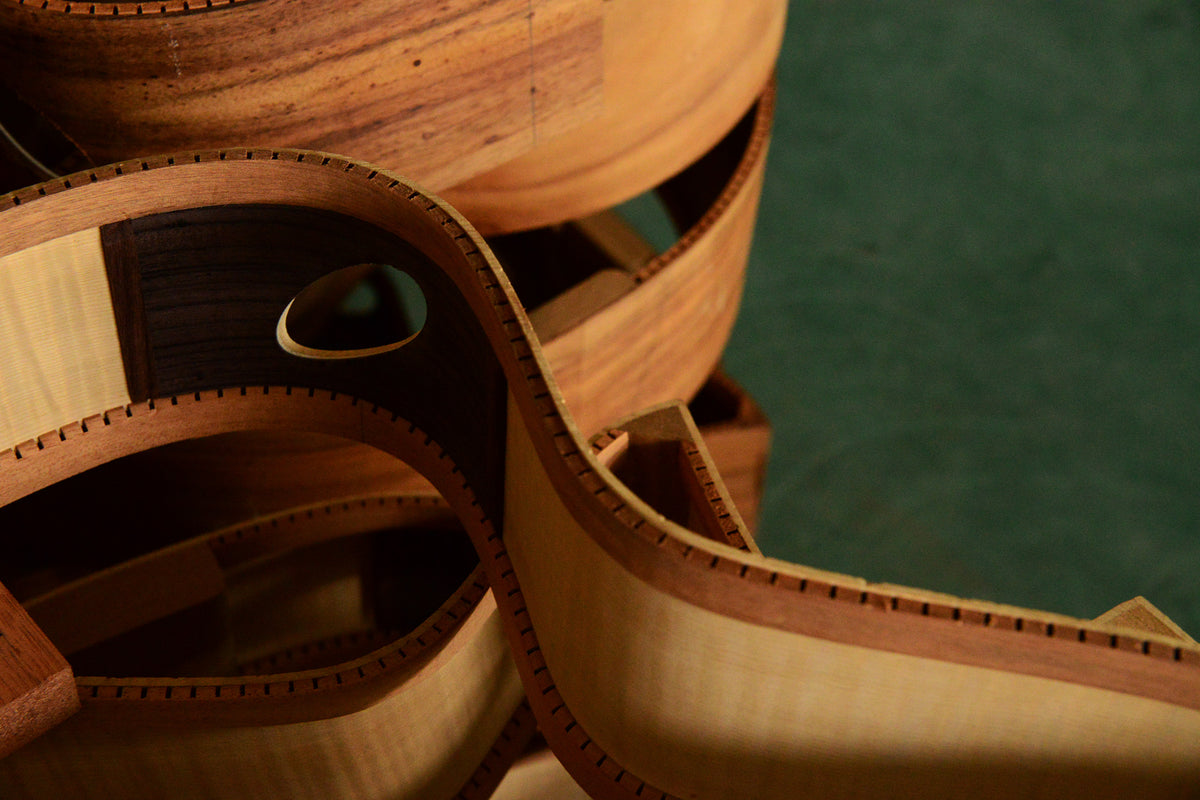
Because a vibrating side leads to energy loss, this rigid frame ensures the top and back can vibrate freely, resulting in more power, sustain, and greater dynamic response. When the top and back are joined to the rim, the guitar crosses an important threshold. The parts become a box. Once the box is closed, the guitar remembers everything—whether the top was taken too far, whether the braces were left too heavy or whether the back was understood. The player may never see those decisions, but the guitar will speak them.