
The Living Voice
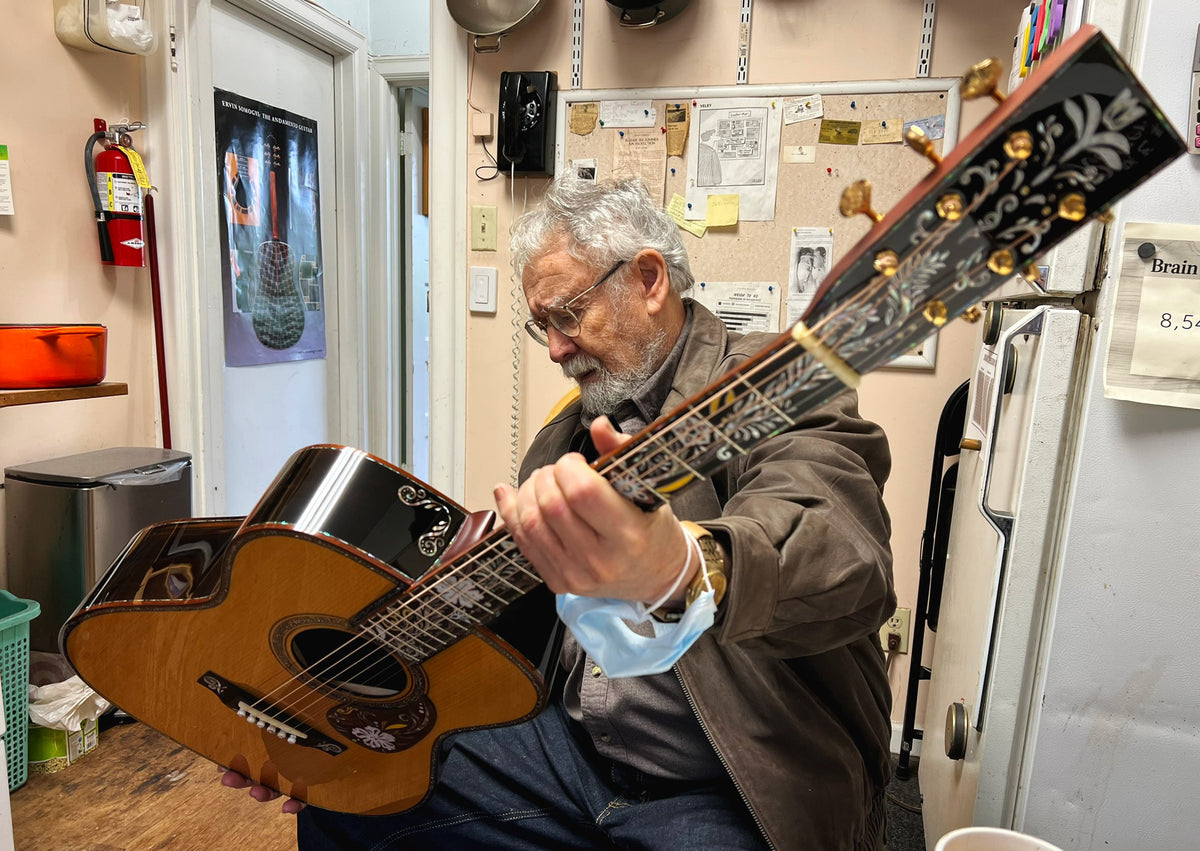
A responsive guitar is not simply louder. It is more willing. Loudness can impress quickly, but response is more personal. It is about how the instrument reacts to the player's touch. The guitar is a system of movement. The bridge drives the soundboard into three primary patterns.
To shape this movement, my voicing work draws from two major streams of influence. From Somogyi, I absorbed lattice-inspired thinking, which in my hands became a path toward sweet trebles and lyrical complexity. From Australian luthier Trevor Gore, I found another language: modal tuning and falcate bracing. Falcate architecture offers a different shape —stronger mids, a confident bass, and a rich fundamental core.

The Monopole
The soundboard pumps up and down as a single unit, which is responsible for the low frequencies and gives the guitar a full, present bass.

The Cross Dipole
The face vibrates in two halves across the center line, dictating the loudness of the guitar in close proximity.

The Long Dipole
The face rocks back and forth along the longitudinal axis of the bridge, acting as the engine for the instrument' s projective power.
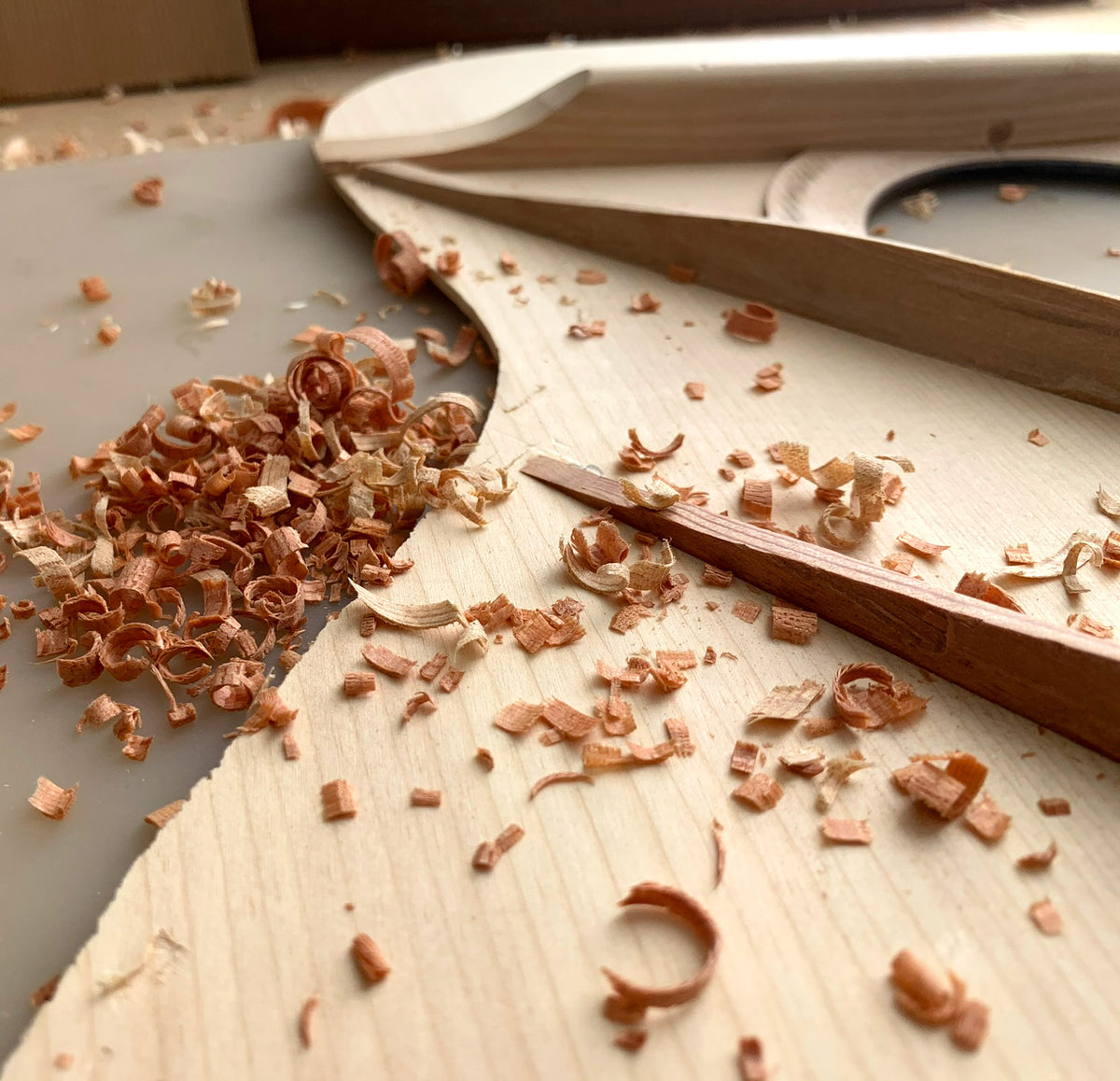
Gore's philosophies also completely changed how I view the back of the guitar. There are essentially two approaches: the "Live Back" and the "Dead (Reflective) Back". A live back is built light and springy, tuned specifically to interact with the air resonance (T111) and the top resonance (T112). When tuned correctly, a live back adds harmonic complexity, overtone richness, and "tone." However, if a maker simply builds a light back without properly tuning its resonance (T113), the back becomes a wild card, acting as an energy sink that works against the soundboard.
Alternatively, a "dead" or reflective back is built stiff and heavy. It refuses to absorb the top s energy, pushing pure volume and projection out of the soundhole. Neither approach is wrong. The wrong choice is using a system without understanding what it is doing. The guitar has to agree with itself. "A specification sheet can tell you what materials were used. But it cannot tell you whether the guitar is alive.