
The Maestro Foundation

Hozen Guitars did not appear from nowhere. It grew out of Maestro. For me, Maestro was never just an earlier brand. It was the long road where I learned the craft through real consequences. It was where I learned to work with suppliers, dealers, players, repair issues, production realities, and the everyday pressure of trying to make instruments better year after year. In the early days, the mission was accessibility. I wanted serious musicians to have access to instruments that felt closer to boutique work, but without the price of the most unreachable individual makers.
That idea carried Maestro for many years. It pushed us to improve materials, add features, refine setup, and build a team capable of more demanding work. I want to be clear about this because the word "factory" is often used too casually. Maestro was not a factory brand in the careless sense people sometimes imagine. It was a small, trained, team-built workshop. The work was done by human hands. The people were taught, corrected, and held to a standard. It was not the work of one person alone, but neither was it anonymous mass production.
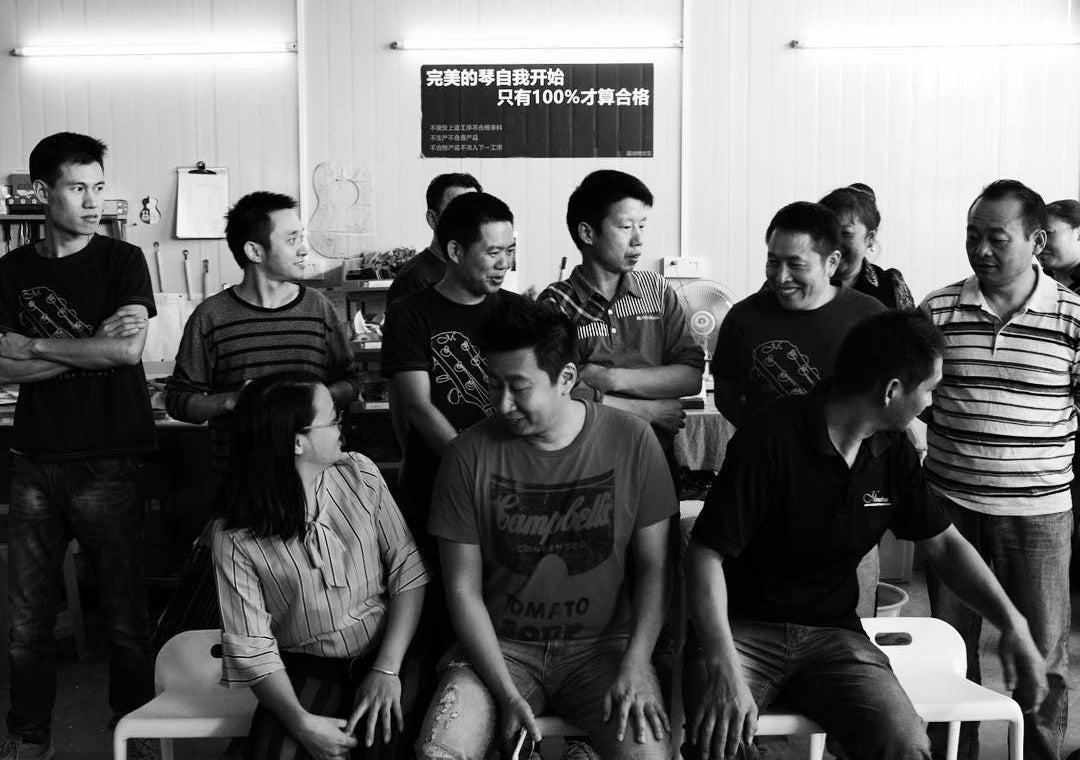
That distinction matters. Team-built work can be shallow if there is no guiding philosophy. But it can also be deeply serious when each person understands his task and the final responsibility remains clear. Through Maestro, I learned how powerful a small team can be when the goal was not merely to produce, but to improve. Still, as the years passed, I began to see the limitation of my own dream. Making better guitars accessible was meaningful. But I was no longer the same builder who started in 2004.
The questions had changed. I was thinking less about how many good guitars we could make, and more about how far I could take a single guitar if I remained close to it. That difference became the beginning of Hozen. I do not look back at Maestro as something lesser. I look at it as the foundation that made Hozen possible. Without Maestro, I would not have learned how to build a workshop. Without the workshop, I would not have understood how hard it is to keep standards consistent. Without the years of mistakes, I would not have developed the judgement I now bring to Hozen Guitars.
That idea carried Maestro for many years. It pushed us to improve materials, add features, refine setup, and build a team capable of more demanding work. I want to be clear about this because the word "factory" is often used too casually. Maestro was not a factory brand in the careless sense people sometimes imagine. It was a small, trained, team-built workshop. The work was done by human hands. The people were taught, corrected, and held to a standard. It was not the work of one person alone, but neither was it anonymous mass production.