
When An Archive Matters
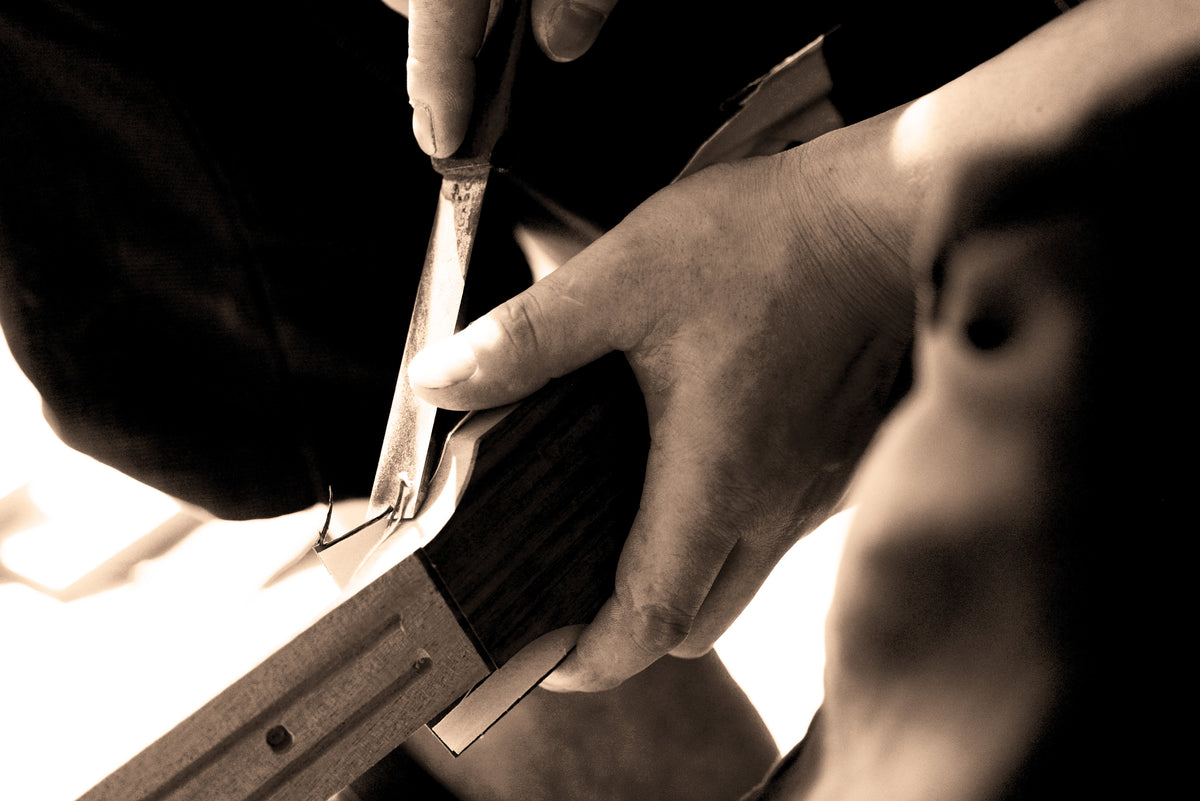
A maker does not always understand his own journey while he is living through it. At the bench, the attention is always on the instrument in front of him. The next brace. The next bridge. The next setup. Only later does the pattern become visible. An instrument remembers the time in which it was made. It remembers the wood available then. The questions the maker was asking. The tools he trusted. The sound he was chasing. This archive is not meant to include every instrument ever built.
Instead, it gathers selected guitars that tell the story more clearly. These guitars carried the optimism of beginning. They show the moment when ambition became process, where workflow, material storage, and the daily discipline of a proper workshop allowed the guitars to become more stable and consistent. They taught the workshop how to improve and carried the early conviction that a guitar should offer more than its price point suggested. These instruments show the transition from tap tone as an isolated idea toward understanding the guitar as a complete, air-pumping acoustic system.

The guitars from this period show the maker learning how to listen differently, seeking sweeter trebles, increased complexity, and a more distributed approach to top response. Exploring Trevor Gore s falcate bracing and Giuliano Nicoletti' s TPC measurements offered another vocabulary. Where lattice-inspired thinking brings sweetness and complexity, falcate thinking brings stronger fundamentals, focus, and scientific honesty, showing that the work continued to evolve based on results, not ideology. Early Maestro Turning Points & Huadu Breakthroughs The Somogyi-Influenced Voicing Period Falcate and Modern Acoustic Experiments The early wedges, armrests, soundports, and bevels were not decorations.
They were attempts to solve real physical problems for the player. They taught me that the player body is part of the acoustic system, and that a comfortable player listens differently, leading directly to the modern Hozen Black Label identity.
Ergonomic Experiments
Why An Archive Matters
A limited edition should not exist only because a number is small. It must capture a material or an idea that cannot be repeated endlessly without losing its force:
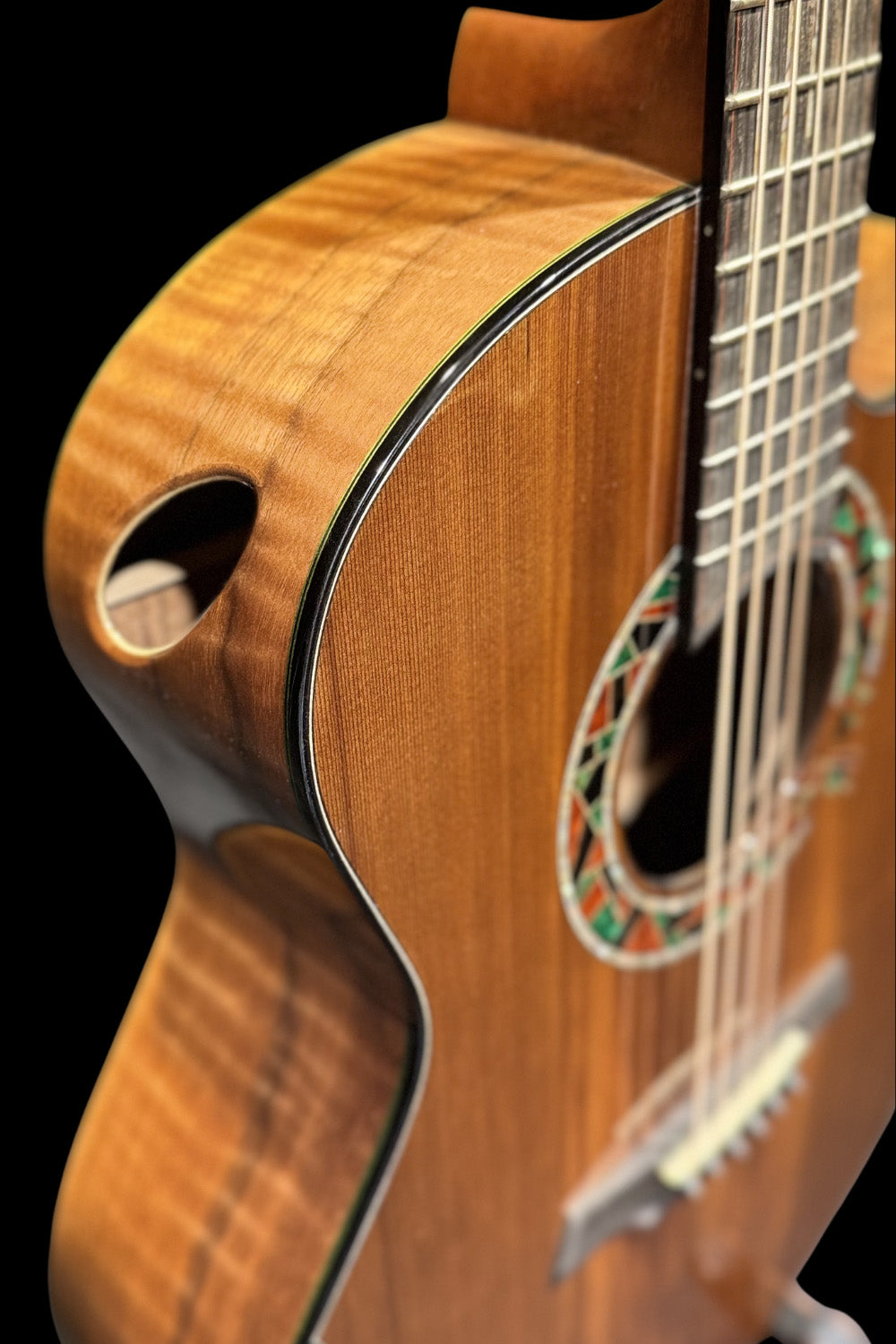
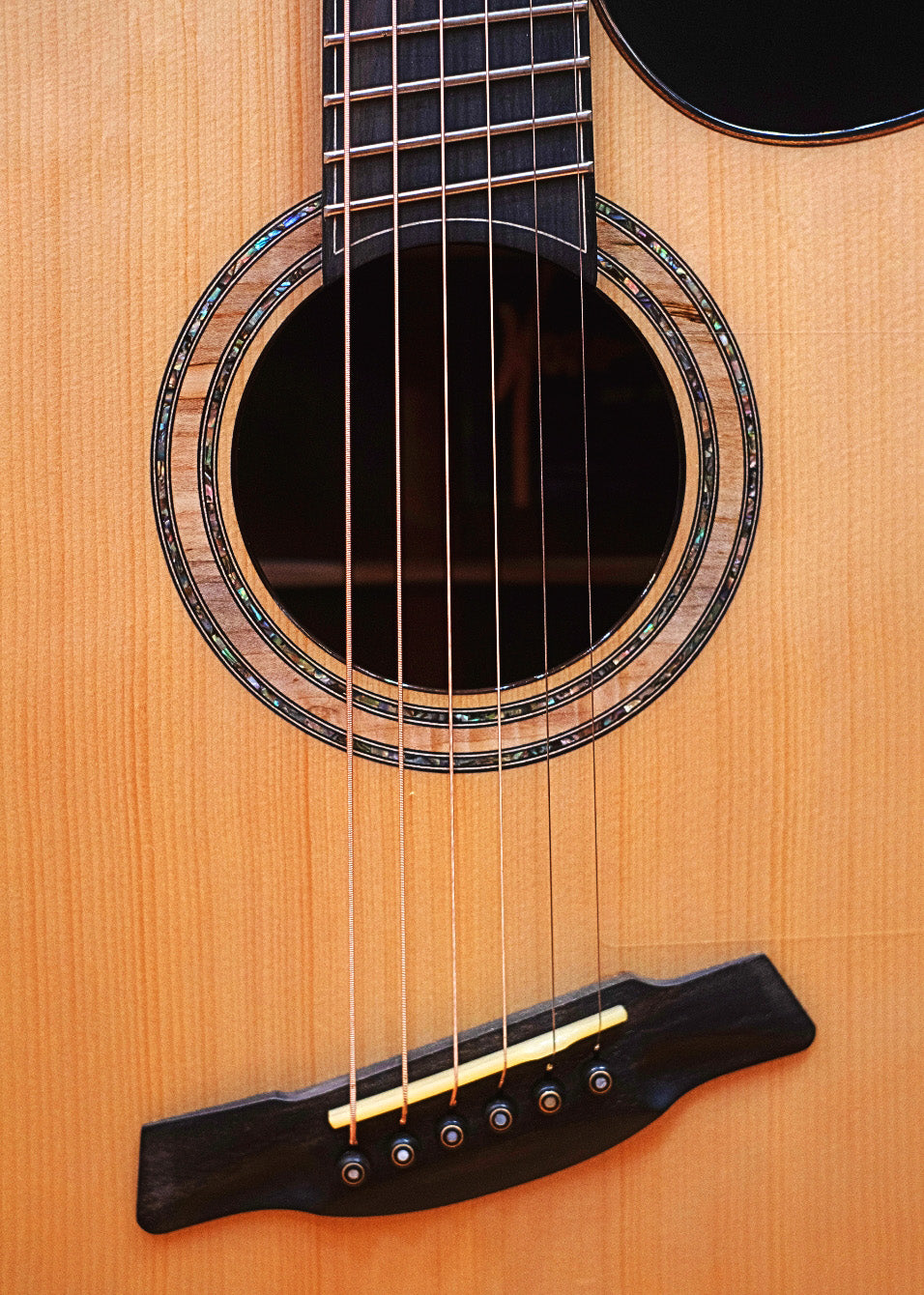
Black Label Limited Edition 2024 MD (Sinker Red Cedar / Flamed Walnut)
Sinker Cedar carries a sense of time before the guitar is even made. This instrument speaks through warmth, age, and restraint.
Drift Fan-Fret MJ (Adirondack / African Wenge)
Drift carries the feeling of movement. The fan-fret layout serves tension, tone, and playability, giving the instrument a modern physical and tonal authority.
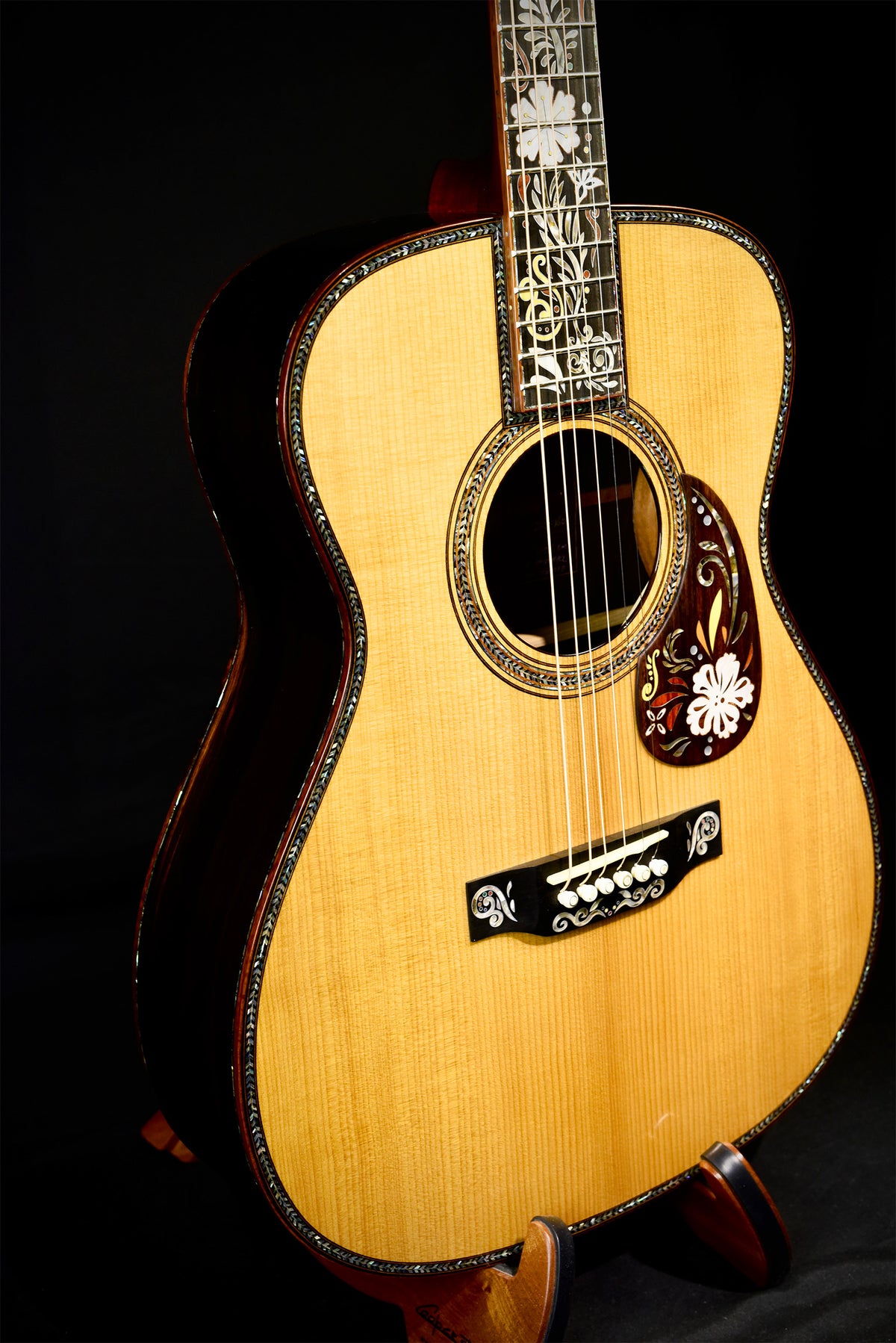
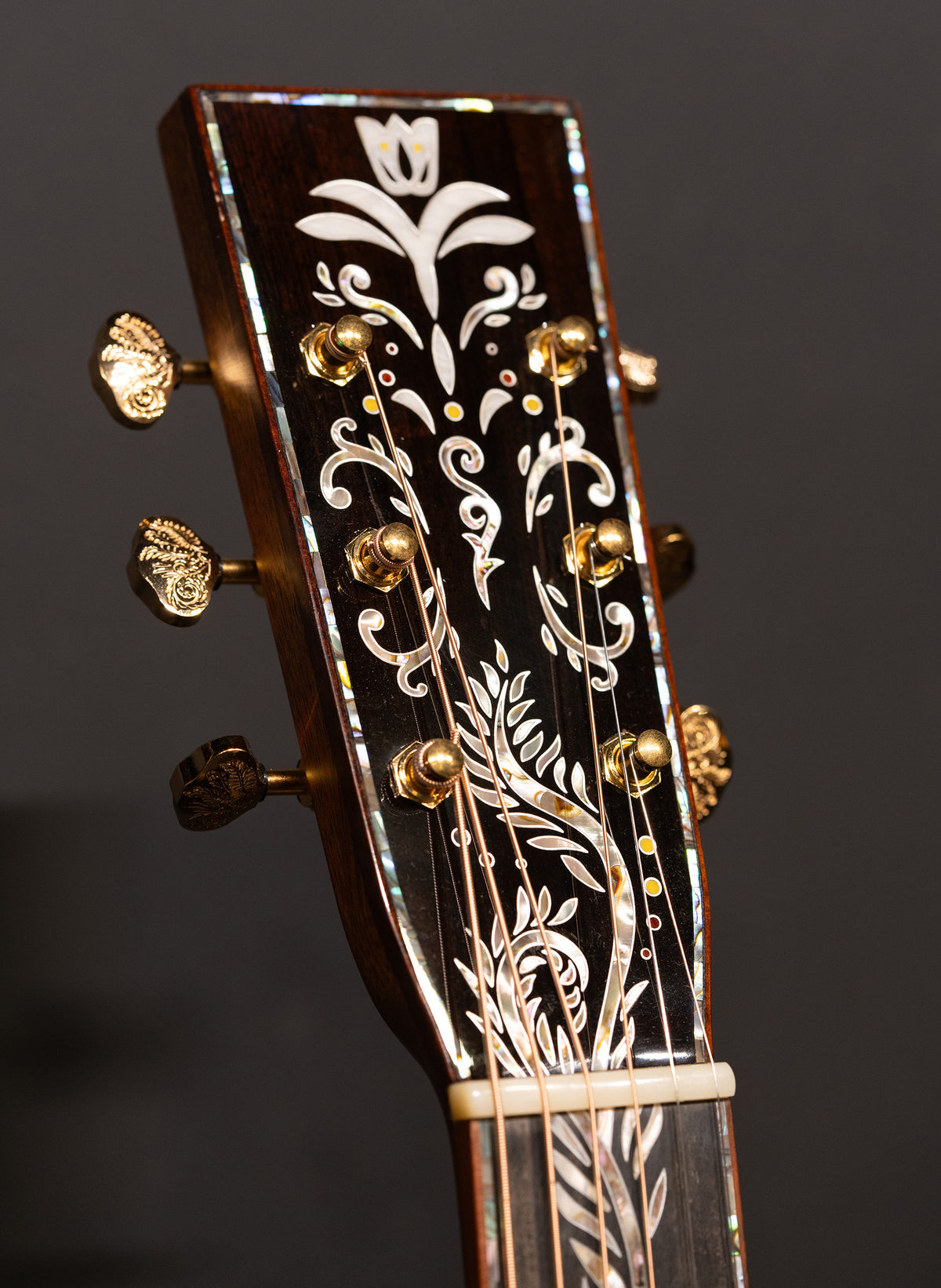
Batik
An all-white concept where cultural motif, clean design, and the discipline of restraint meet.
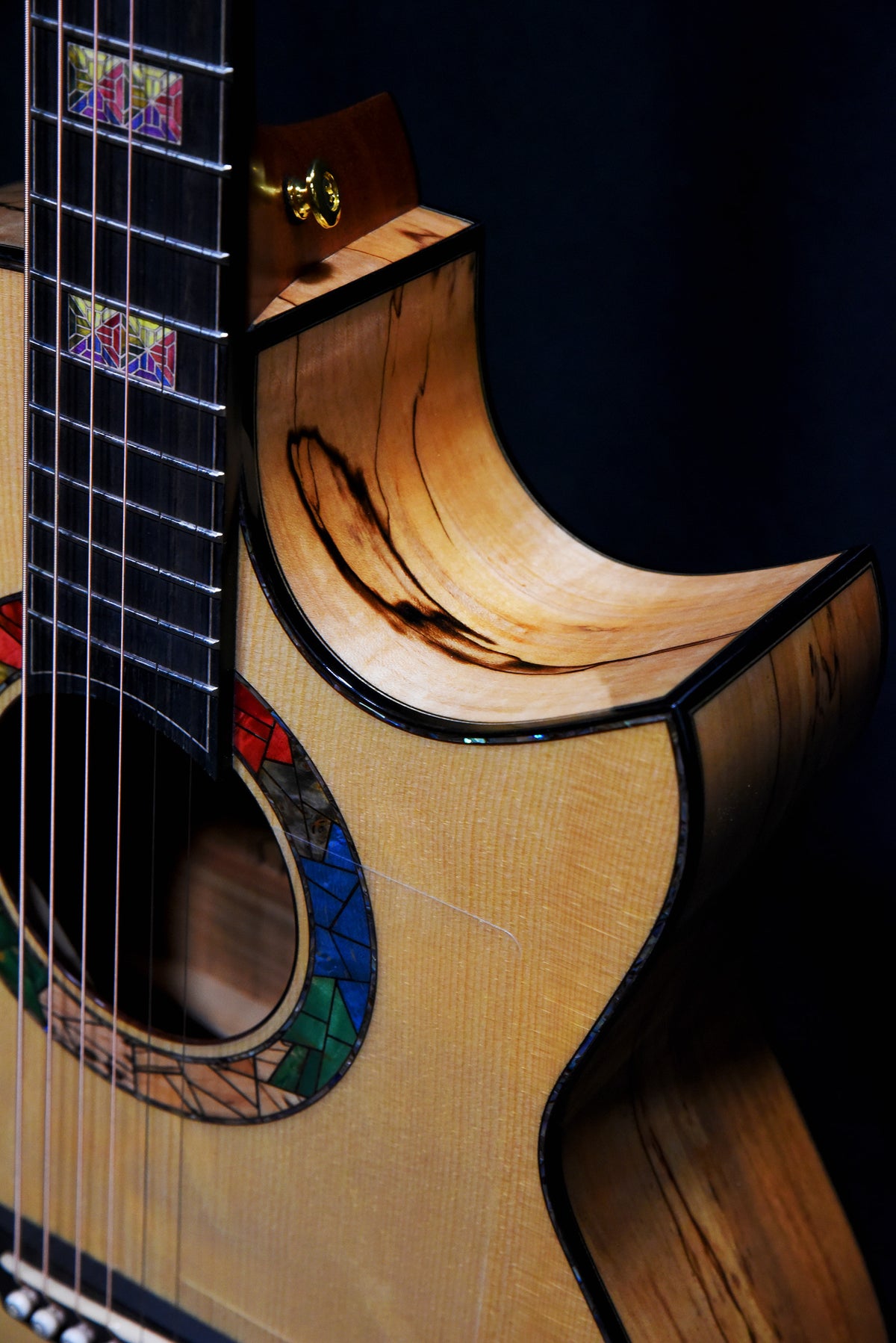
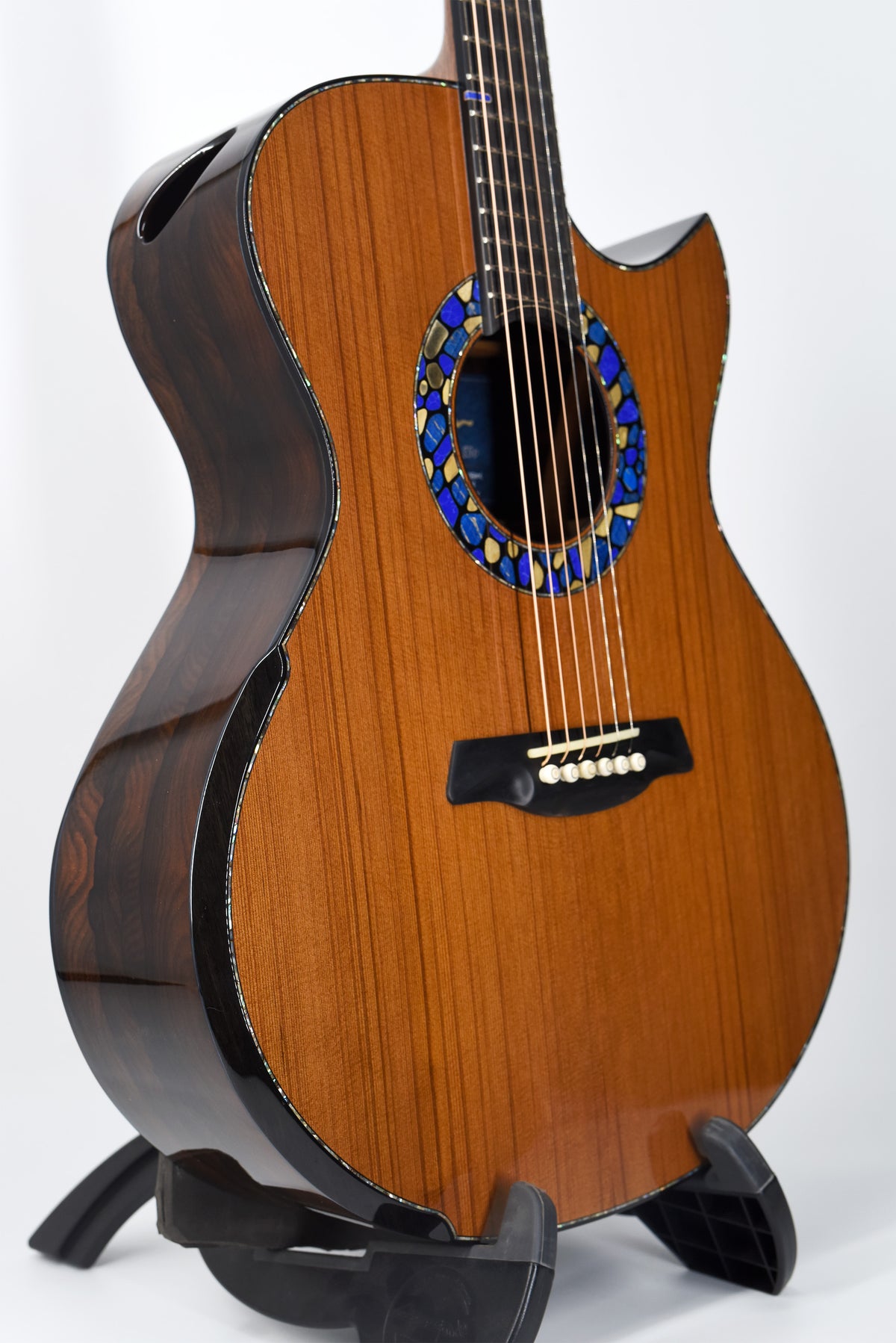
Mosaic
Featuring Swiss Moon Spruce and Chocolate Mango, the rosette and markers create a visual rhythm that suggests many small pieces becoming one coherent whole.
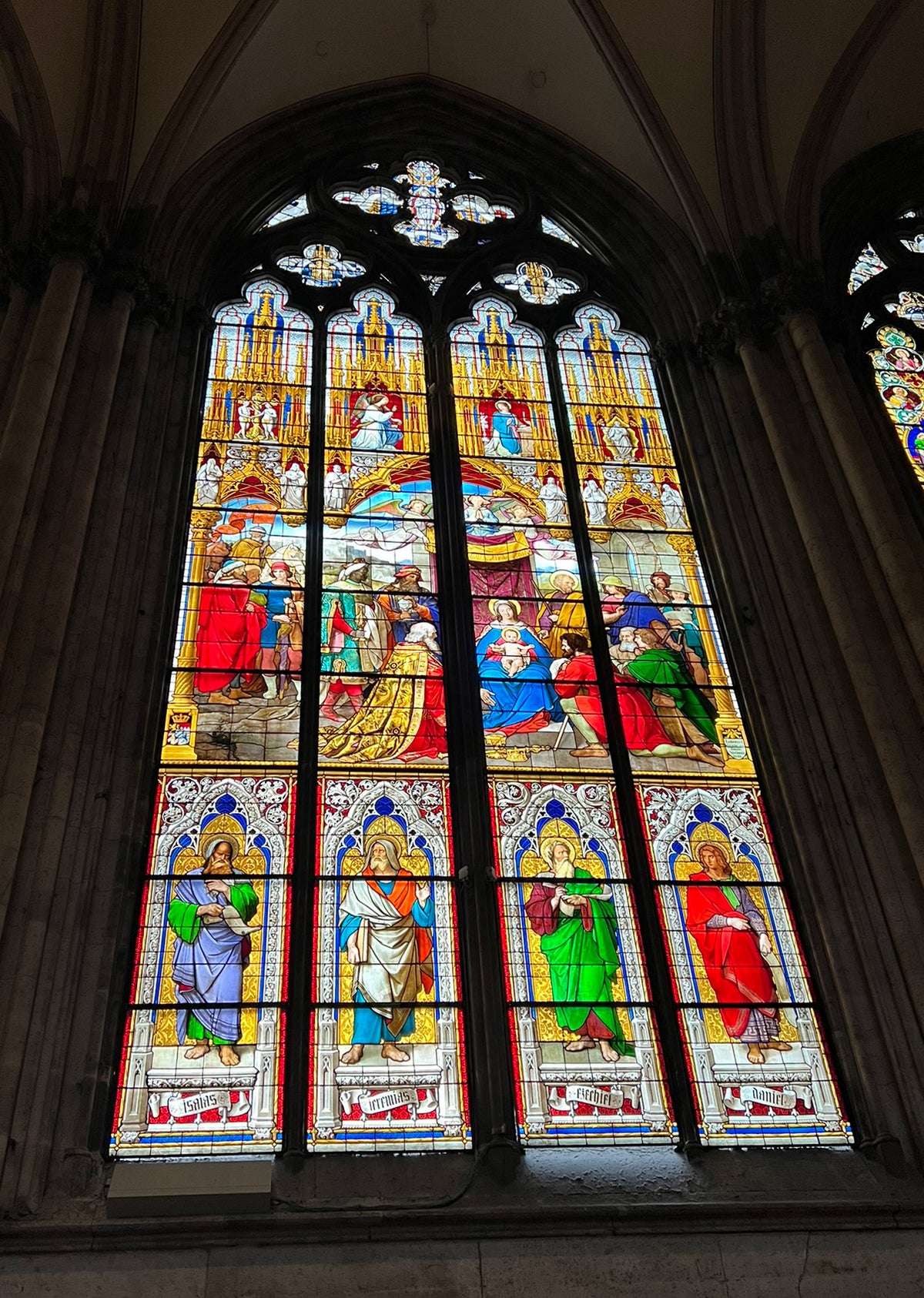
Inspired by the stained glass windows of the Sagrada Família in Barcelona, Spain.
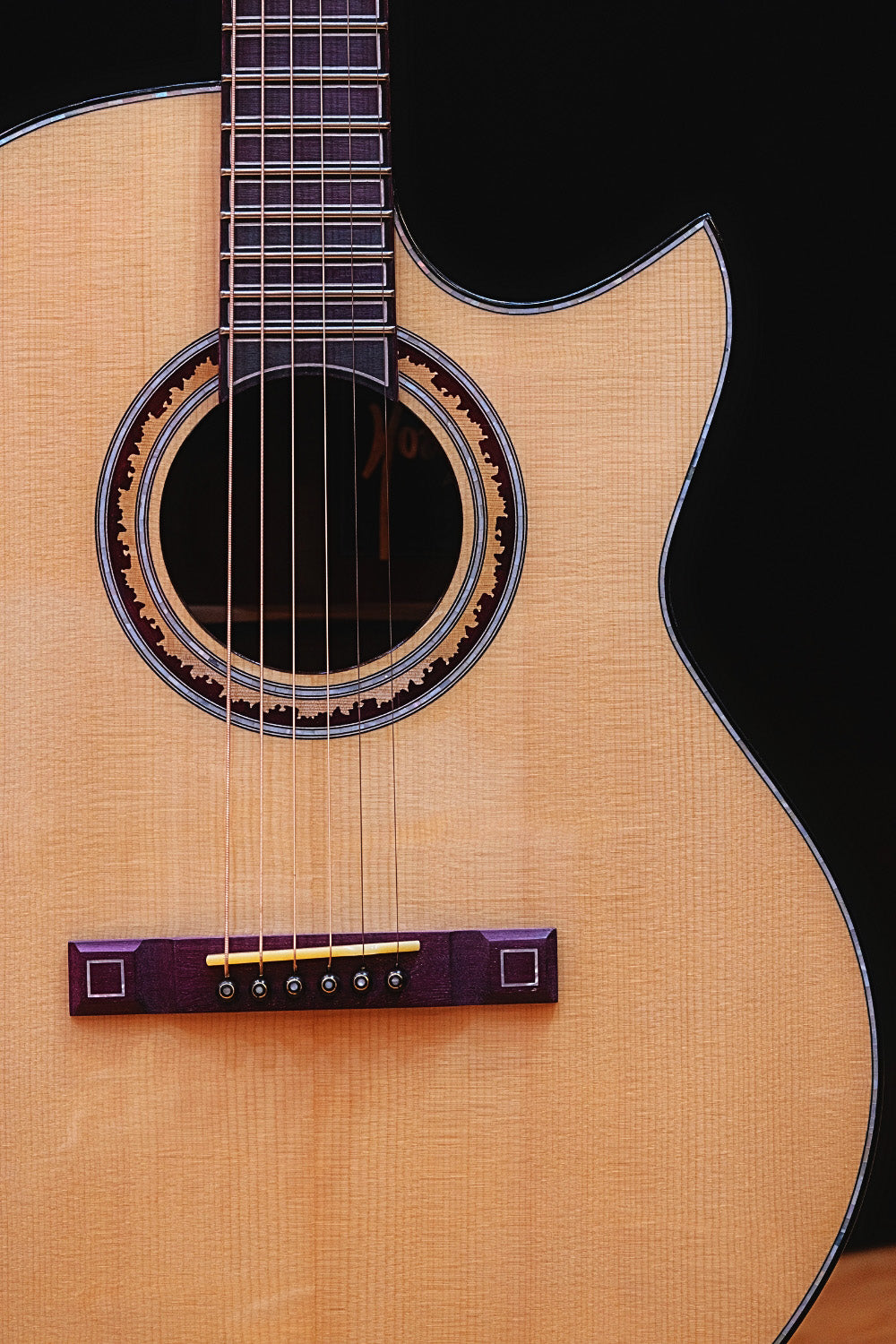
Purpleheart SJ Vintage
Purpleheart carries both visual strength and tonal authority, proving the guitar does not need to hide its bold character.
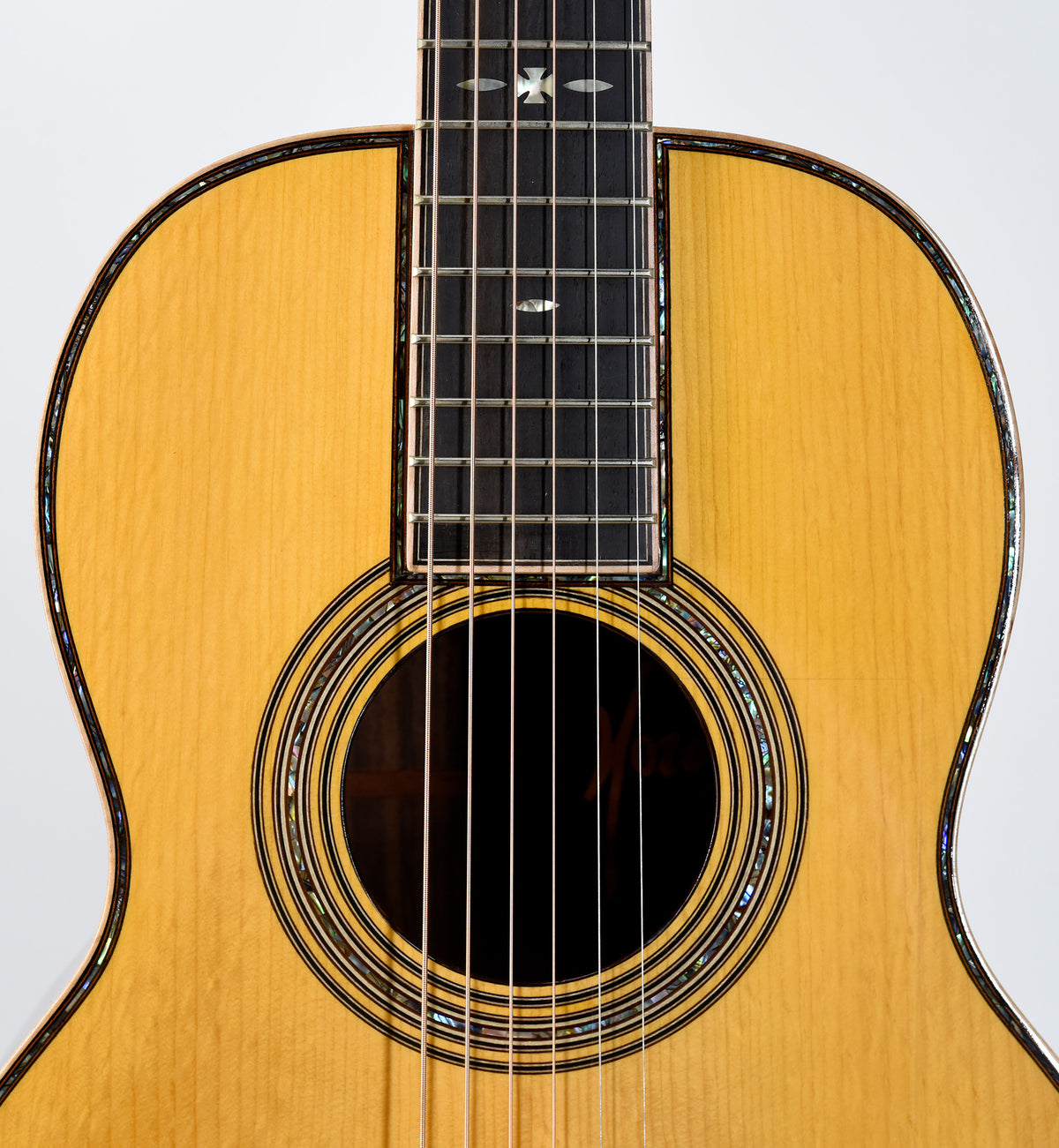
1900s-Style 12-Fret Parlor
A backward look with care, utilizing ethical imitation ivory, showing that tradition can be honoured without inheriting its material flaws.
Exhibition Instruments & Blue Label One-Off Works
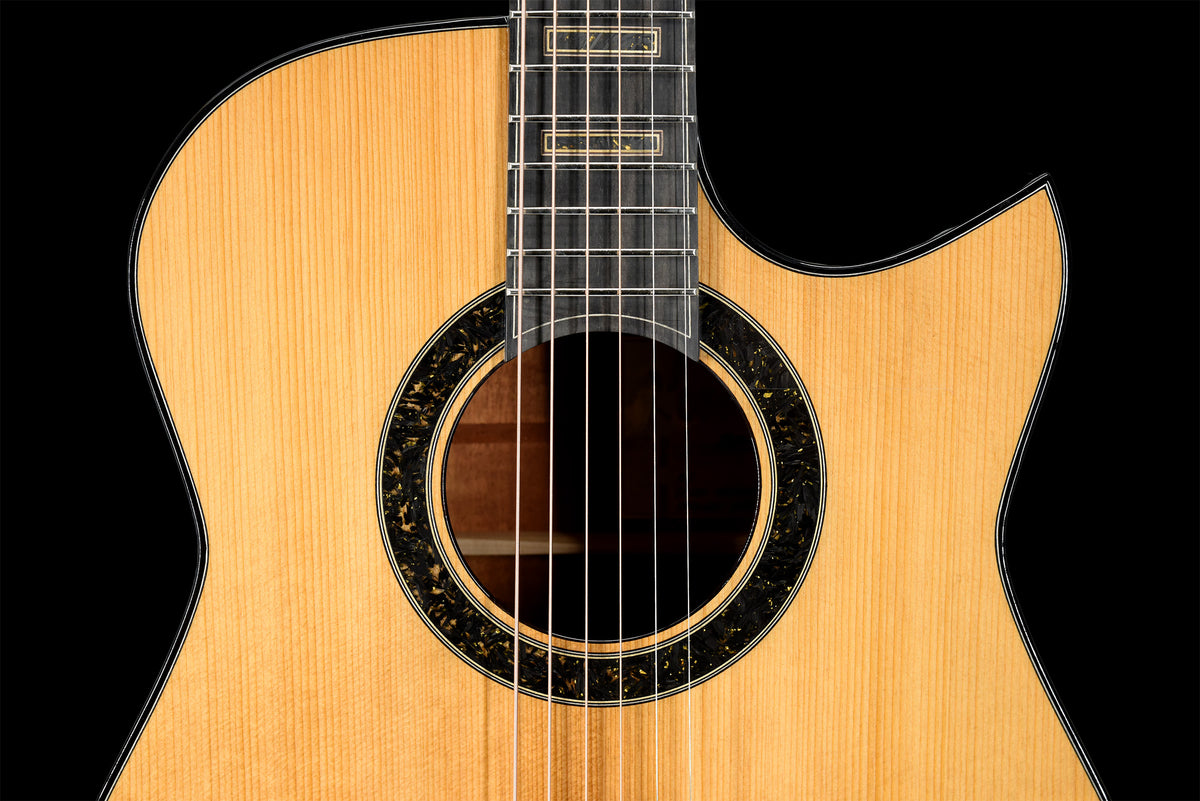
An exhibition guitar has only a short time to speak; it must make a case for itself in the hands amid a noisy room of competitors.The Blue Label works are the fullest expression of the maker's imagination at a particular moment, built around a singular idea rather than a list of options.
Gold Label Mature Direction
Representing confidence in restraint, these guitars ask the player to judge the instrument solely by what happens in the hands when all visual excess is removed. It is the distilled Hozen guitar.