
Doing the Wrong Thing the Right Way
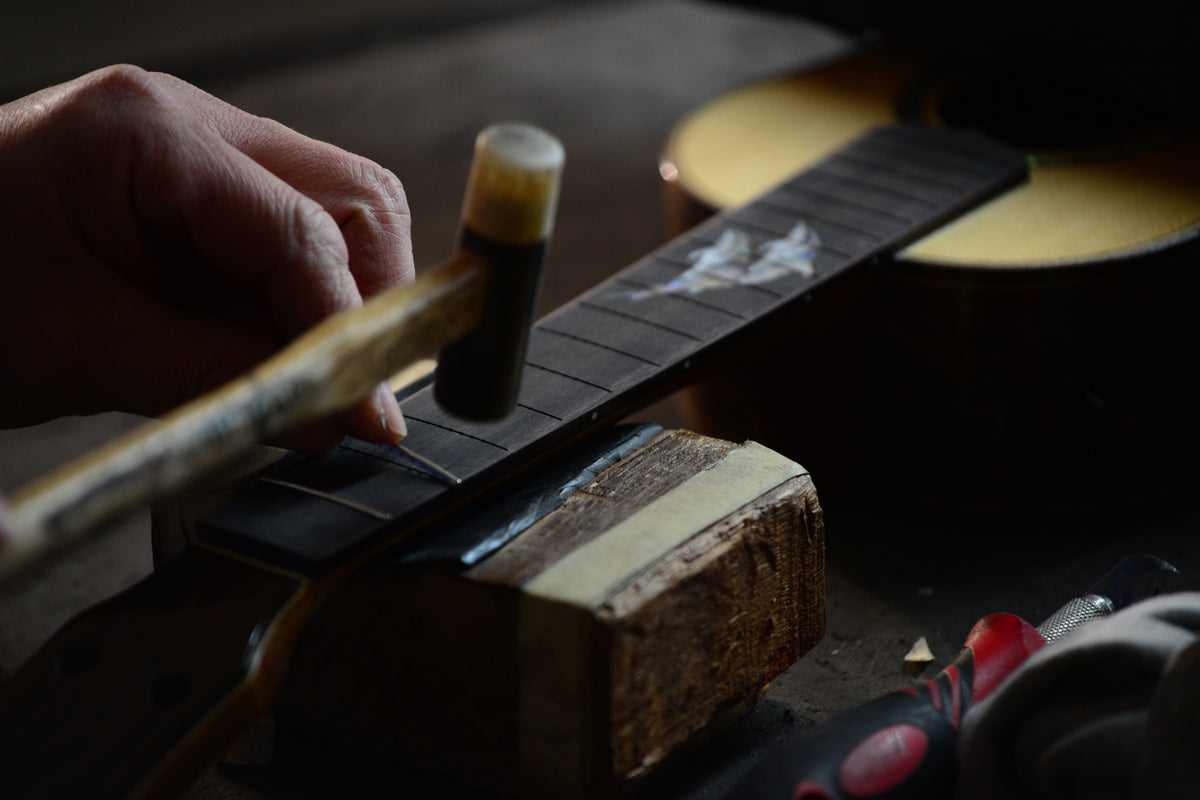
A guitar can be cleanly built and still be misunderstood. That is one of the hardest truths in the craft. Good workmanship matters. Clean joints matter. A beautiful finish matters. A neat brace pattern matters. But none of these things automatically mean the instrument has an authentic voice.
Today, the word "hand-voiced" has become a marketing buzzword. Consumers often think voicing is a fixed, standardized process of carving bracing—like a recipe to be followed. But voicing is not a recipe.

The deeper questions a player must ask.
Who is doing the voicing?
Who was their teacher?
And do they actually understand what they are doing?
It is entirely possible to do the wrong thing very well. A maker can carve a brace beautifully, but in the wrong direction. A top can be thinned confidently past the point where it should have stopped. A CNC machine can cut a flawless geometric pattern. A guitar can be made lighter, louder, cleaner, or more decorative, yet still move further away from the voice it is capable of becoming.
This brings to mind a conversation between master luthier Bryan Galloup and Jamie Gale.
They discussed the legendary Ken Parker and how he used a simple guitar string as a truss rod in his groundbreaking Fly guitars. Parker did not do this to be unique; he did it because he intimately understood the exact mechanical resistance the neck required. Galloup noted the critical difference between knowledge and understanding. Knowledge is knowing how to use a tool or follow a blueprint. Understanding is knowing why the material behaves the way it does

Without understanding, a builder is simply executing a task.
Every soundboard carries a different stiffness, weight, and hidden potential. The maker's task is not to force it into a famous recipe, but to understand what that particular piece of wood is asking for. The hand must know when to remove more, when to stop, and when the guitar has begun to answer back.